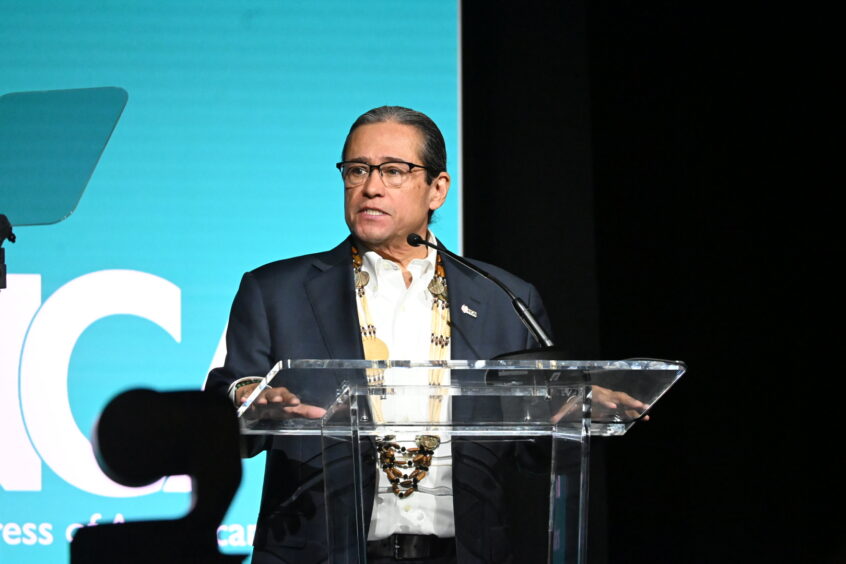
NCAI President Mark Macarro gives his welcome address.
By ROSELYNN YAZZIE
Office of Public Affairs
PALM SPRINGS, Calif. — The National Congress of American Indians (NCAI) has adopted a resolution opposing the proposed transfer of Shoshone-Bannock Tribes’ ceded lands to the J.R. Simplot Company for expansion of its toxic waste storage site. The action brings national tribal support to the Tribes’ efforts to defend their treaty rights and uphold federal trust responsibilities.
Fort Hall Business Council Chairwoman Donna Thompson attended NCAI’s Annual Convention October 18-22, 2026, to present Resolution PSC-26-028, titled “Opposition to the Transfer of the Shoshone-Bannock Tribes’ Ceded Lands to the J.R. Simplot Company to Expand Their Toxic Waste Site Listed on the EPA’s Superfund National Priority List.” The resolution was reviewed by NCAI’s Land & Natural Resources Committee before its adoption.
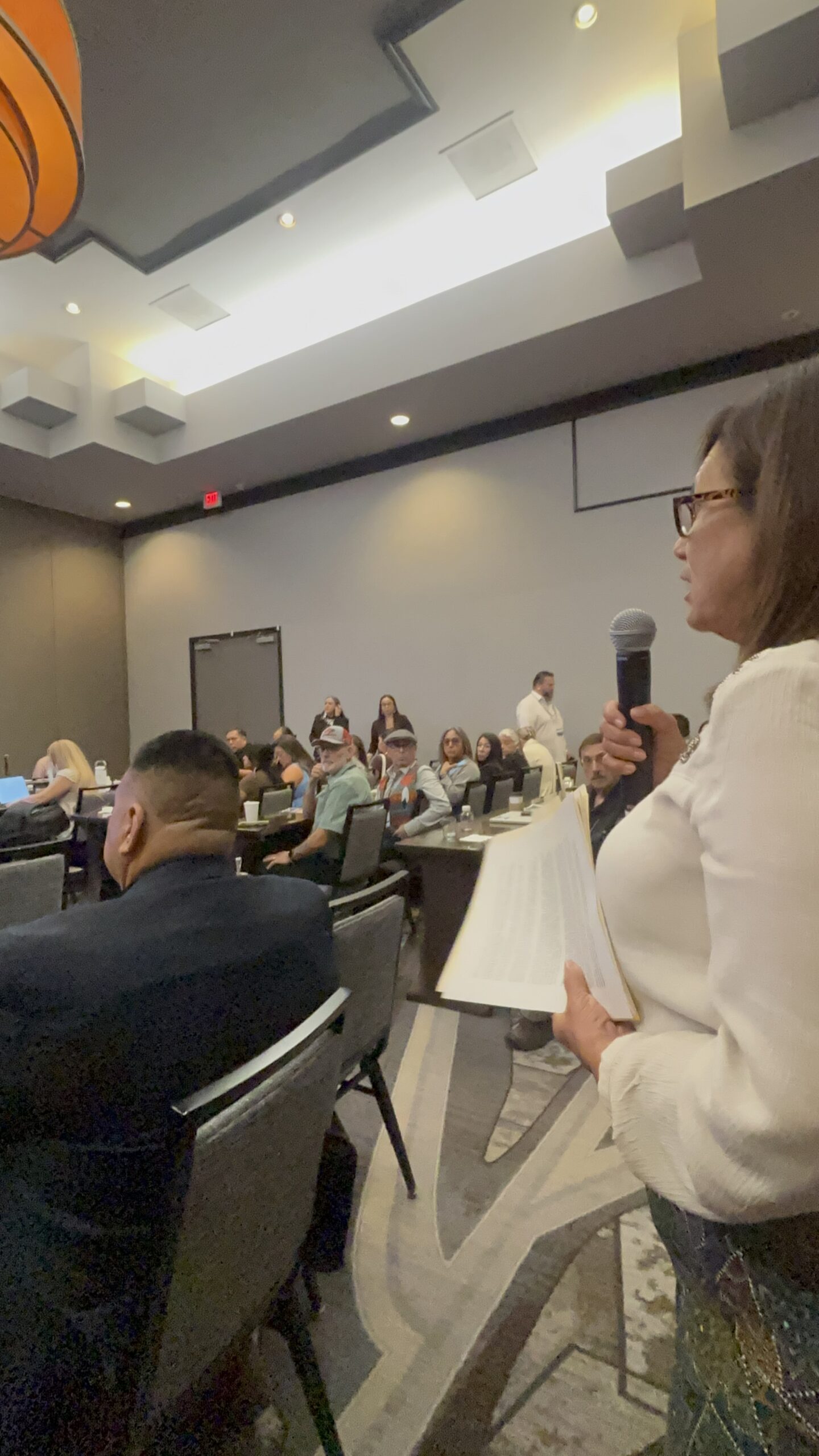
Shoshone-Bannock Tribes Chairwoman Donna Thompson addresses the Land & Natural Resources Committee at NCAI.
Chairwoman Thompson stressed that the issue extends beyond Fort Hall.
“What is happening to the Shoshone-Bannock Tribes should concern all of Indian Country,” she said. “If our ceded lands and treaty rights can be put at risk through a congressional land transfer, other tribes must ask what that could mean for their own lands and treaties.”
She continued, “The support of tribal nations across the country sends a strong message that we stand together in protecting the commitments made to our people. This is bigger than one land transfer, it is about ensuring that federal obligations are honored and that the rights of tribal nations are not set aside for private interests. What happens to one tribe today could set a precedent for others tomorrow.”
The resolution focuses on the proposed transfer of Bureau of Land Management land to the J.R. Simplot Company for expansion of its phosphogypsum waste storage site, part of the Eastern Michaud Flats Superfund Site. It urges Congress to remove the transfer language from the fiscal year 2027 National Defense Authorization Act and to prevent it from appearing in any other bill.
The Shoshone-Bannock Tribes argue that the transfer threatens rights reserved in the 1868 Fort Bridger Treaty and the 1898 cession agreement, which was ratified by Congress in 1900. These agreements affirm that tribal treaty rights continue to apply on ceded lands.
The resolution’s adoption came as tribal leaders at the convention emphasized the growing need to protect tribal sovereignty and uphold treaty commitments.
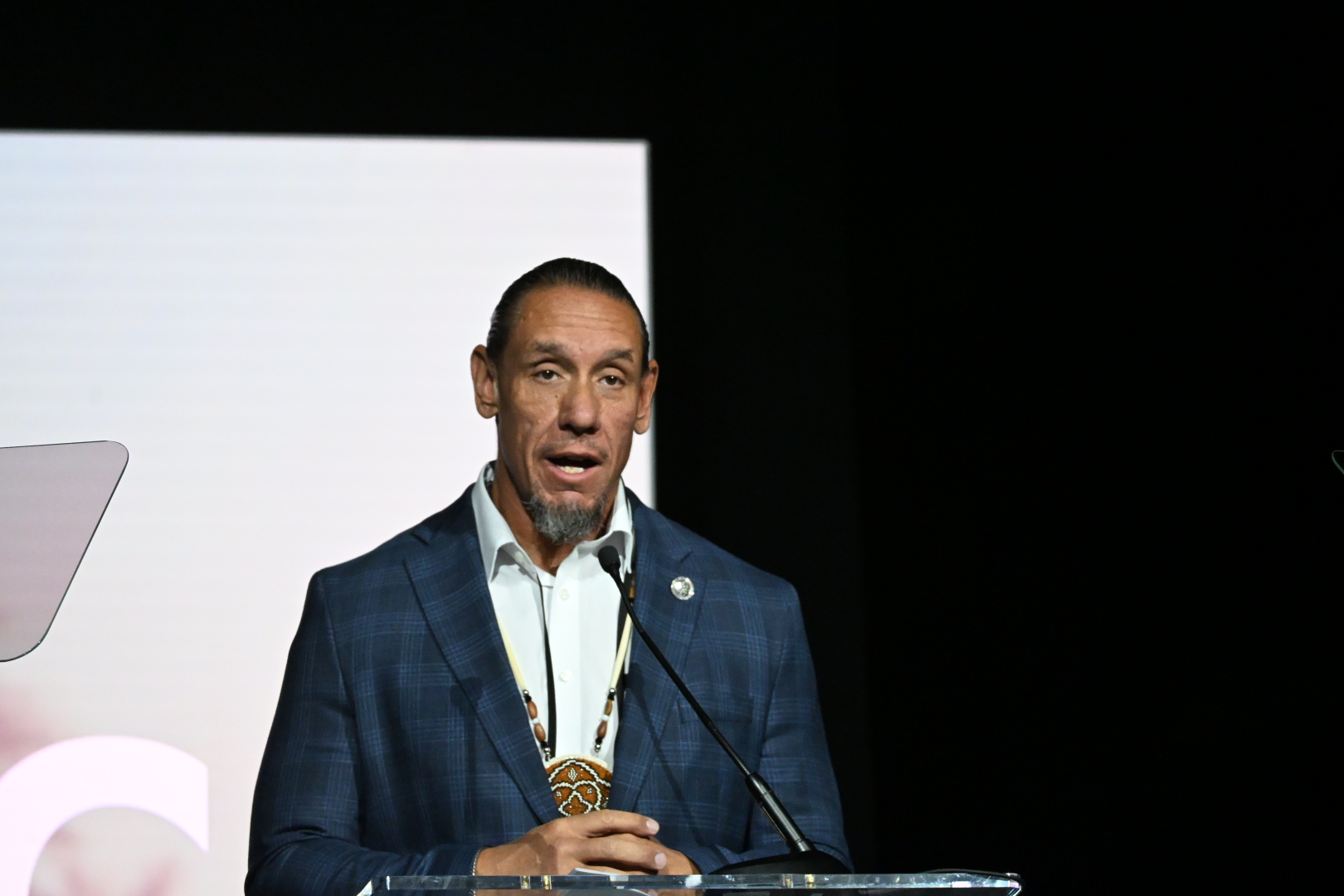
Agua Caliente Band of Cahuilla Indians Chairman Jeff Grubbe welcomes tribes to the NCAI conference.
In his welcome address, Agua Caliente Band of Cahuilla Indians Chairman Jeff Grubbe noted that tribal nations continue to face challenges. “There is no such thing as an isolated attack on tribal sovereignty. That is why our collective voices matter. That is why NCAI matters,” he said.
NCAI President Mark Macarro, Chairman of the Pechanga Band of Luiseño Indians, emphasized the responsibility of the United States to honor its commitments. He outlined three principles: the need for the federal government to uphold treaty obligations, to faithfully execute its trust responsibility, and to recognize tribal nations as sovereign governments.
“A government that demands trust must be willing to earn it,” Macarro said. “If we are serious about democracy, we must be serious about upholding the trust and treaty obligations of the United States.”
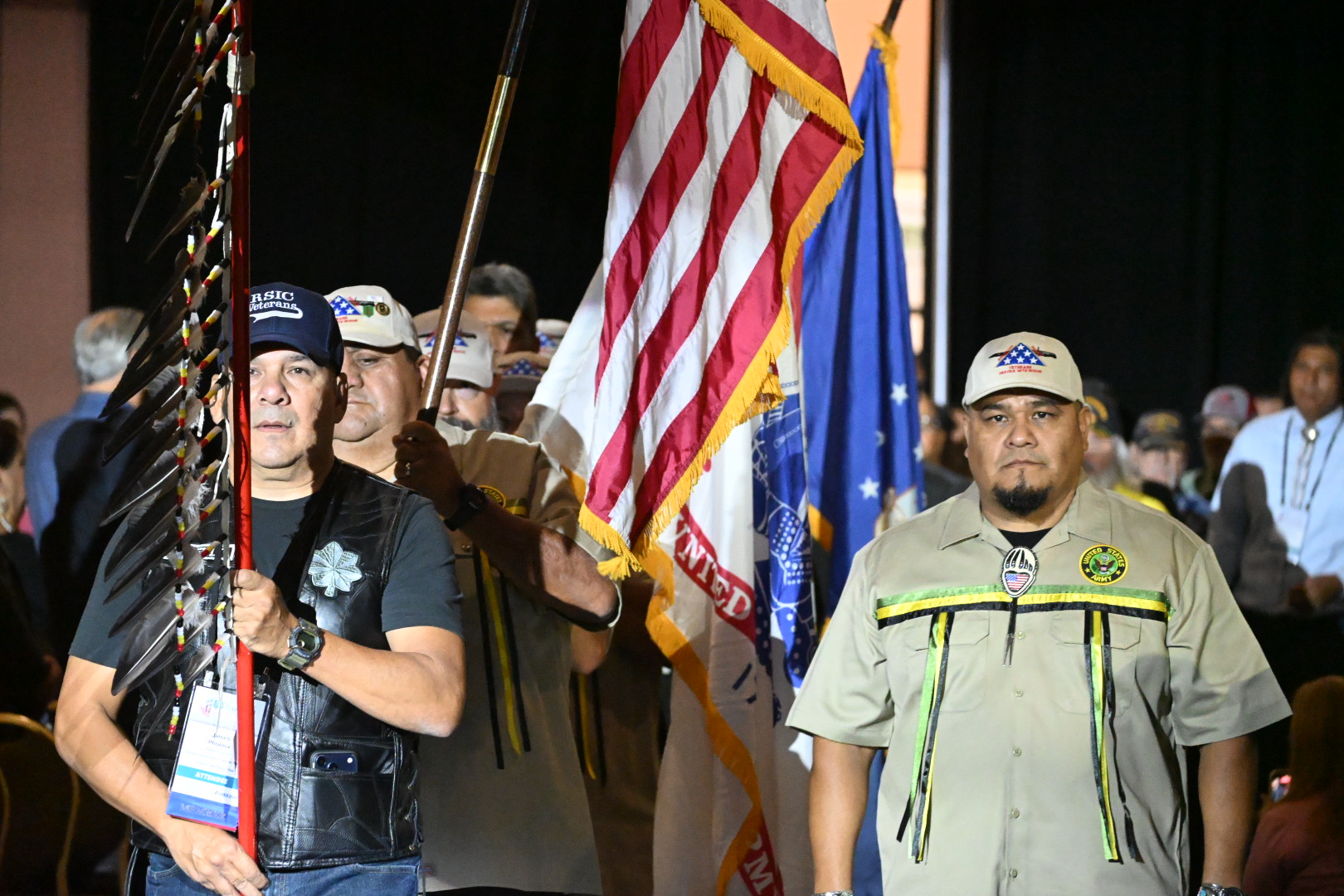
Color guard open the first day’s general assembly on October 19.
NCAI’s Annual Convention is also a vital space for tribal leaders to receive direct updates from the administration, understand emerging national policy issues, and collaborate with other tribes. The gathering provides opportunities to share strategies, strengthen partnerships, and stay informed on matters affecting communities across Indian Country. Chairwoman Thompson’s participation ensures the concerns of the Shoshone-Bannock Tribes are represented in these national discussions and that the Tribes remain engaged in federal decision-making processes.
For the Shoshone-Bannock Tribes, NCAI’s support is a significant show of solidarity and a reminder that treaty rights are not historical relics, but they remain binding commitments that must guide federal decision-making. This also reflects the Fort Hall Business Council’s ongoing work to raise these concerns in national forums, build alliances, and defend the rights reserved by their ancestors for future generations.
Founded in 1944, NCAI is the oldest and largest national organization representing American Indian and Alaska Native Tribal governments and advocates for Tribal sovereignty, treaty rights, and the interests of Tribal nations.