Law360 (October 22, 2026, 2:21 PM EDT) — The U.S. Supreme Court should reject an Idaho agribusiness’s bid to reverse a decision that invalidated a land transfer over concerns of contamination from a planned fertilizer plant expansion, the Shoshone-Bannock Tribes said, arguing the federal government violated a century-old restriction on the ceded lands.
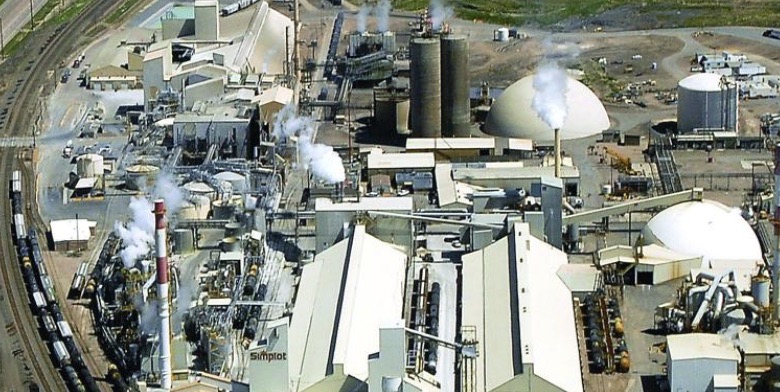
The tribes told the justices that J.R. Simplot Co. LLC, the owner of a phosphate fertilizer plant neighboring the tribes’ Fort Hall Reservation, since the 1940s has contaminated their water, land and air through mainly a “mountain-sized pile of waste” from its processing operations.
Although the Boise-based company has been subject to clean up orders since the 1990s, the tribes said, the contamination continues “and will for years to come.”
Now, J.R. Simplot looks to expand its gypstack on 713 acres of tribal ceded lands through a U.S. Bureau of Land Management exchange in order to expand production, the Shoshone-Bannock Tribes said.
However, they argued in a Wednesday brief, the BLM didn’t invoke or apply what’s known as the 1900 Act, which governs the Fort Hall Reservation’s disposition, to authorize the exchange. Instead, the agency did so under the Federal Land Policy and Management Act.
“There is no reason for this court to grant these premature petitions challenging a splitless, factbound determination regarding a century-old statute that applies exclusively to discrete lands,” the tribes said.
J.R. Simplot argued in a July petition for certiorari to the U.S. Supreme Court that the BLM approved the 2020 land exchange under the FLPMA because it would serve the public interest, but a decision last year by the Ninth Circuit “unravels” Congress’ work in crafting the law’s comprehensive scheme.
“The court held FLPMA’s express authority was unavailable because a different statute, enacted three-quarters of a century before FLPMA, had authorized a narrower set of disposal methods when the United States first acquired the lands by tribal cession,” the company argued.
The Ninth Circuit’s August 2025 ruling upheld U.S. District Judge B. Lynn Winmill’s March 2023 decision to invalidate the transfer of land, saying the 1900 Act limits the disposal of treaty-ceded lands.
J.R. Simplot, an intervenor in the dispute, had told the appellate court that the tribes erred in arguing the single word “only” in Section 5 of the 1900 Act renders “exclusive” the original disposal methods authorized for the disputed lands that the tribes ceded.
Section 5 of the act ratified a 1898 land cession agreement between the government and the Shoshone-Bannock Tribes.
However, the panel majority disagreed, saying the FLPMA is not a homestead, townsite, stone and timber or mining law: It is a general land management law that governs any land and interest in land owned by the U.S. within several states and administered by the BLM that establishes uniform procedures for land disposal.
The U.S. Department of the Interior and J.R. Simplot had each asked the Ninth Circuit in January 2024 to reverse the district court’s ruling, saying it erred in rejecting most of the tribes’ FLPMA claims and National Environmental Policy Act arguments while holding that the land exchange violated the 1900 Act.
The federal government’s decision to approve the 2020 land swap, known as the Blackrock Exchange, was valid because the tribes sold the lands to the United States in 1898 and did not make provisions for their later disposal, the DOI argued.
The full Ninth Circuit in April rejected J.R. Simplot’s petition for an en banc rehearing butsparked dissents from seven Republican-appointed judges, who said the majority was blocking the government’s administration of the property that was once owned by the Indigenous nation.
U.S. Circuit Judge Eric C. Tung, who was appointed by President Donald Trump, led one of two dissents in the order, arguing that the panel majority’s “flawed opinion comes from its highly unusual implications.”
In the second dissent, U.S. Circuit Judge Daniel P. Collins said the majority incorrectly resolved “an important question in a manner that has potentially significant ramifications for other cases.”
According to J.R. Simplot’s petition, the federal government bought almost a half-million acres, including the disputed exchanged lands, from the Shoshone-Bannock Tribes in 1898. The U.S. agreed that the tribes could continue to use the lands as long as the lands remained public domain.
In 1900, when Congress ratified the acquisition, it moved the ceded lands out of public domain by authorizing their disposal “only” under a limited set of “then-extant (but now repealed or unavailable) authorities,” J.R. Simplot argued in the petition. Laws that were enacted later authorized more disposal methods that culminated in the FLPMA, the company said.
According to the Shoshone-Bannock Tribes’ brief Wednesday, J.R. Simplot’s primary argument is that the Ninth Circuit’s decision will impede the federal government’s ability to dispose of land governed by other pre-FLPMA laws.
But the Ninth Circuit didn’t purport to announce a rule that’s applicable to those laws, the tribes argued. Instead, they said, the circuit court “grounded its holding firmly in the 1900 Act’s text.”
“And the allegedly analogous land disposition statutes have distinct features from the 1900 Act, which may lead to different results if and when those statutes are individually scrutinized by courts,” the tribes argued.
There’s no real threat that the other laws will cause a dispute anytime soon, they said.
The Fort Hall Business Council, the governing body of the Shoshone-Bannock Tribes, told Law360 in a Thursday statement that it “stands united in protecting our Treaty Rights, homelands and future generations. Decisions made today will have lasting consequences for our land, water and public health, and all tribes must have a voice in matters that affect them. We will engage elected leaders, pursue every appropriate avenue to defend our rights and hold decision-makers accountable. Our responsibility is to our people, to the land and water that sustain us, and to the generations to come.”
The federal government and the Ninth Circuit’s en banc dissenters say the circuit court’s decision “sharply” departs from a longstanding view that the FLPMA displaces all prior land laws, but they fail to point to a single case in the last half-century in which a court has held as much, the tribes argued in their brief.
“That strongly suggests this question is not nearly as important as petitioners would have this court believe. Besides, in the unlikely event that the government’s parade of horribles manifests, the court can grant review then. Review now is premature,” the Shoshone-Bannock Tribes said.
The Supreme Court’s view of J.R. Simplot’s petition would not affect the case’s outcome, the tribes argued, saying the Ninth Circuit correctly found that Congress in 1900 limited the means of transferring the ceded lands out of public domain.
Since 1900, they said, Congress amended those restrictions several times, but there is no amendment that permits the land transfer in the case. The BLM’s violation of the 1900 Act, the tribes said, was only one of the district court’s four grounds for striking down the exchange.
“As a result, even if petitioners prevail on the question presented, the land exchange will not be revived. There is no reason for the court to weigh in on a splitless question that is not outcome-determinative, particularly given this case’s interlocutory posture,” the Shoshone-Bannock Tribes told the high court.
Counsel for the parties could not immediately be reached for comment Thursday.
J.R. Simplot is represented in-house by Thomas C. Perry and by Miguel A. Estrada, Jonathan C. Bond, Lavi M. Ben Dor, Patrick J. Fuster and Stephen J. Hammer of Gibson Dunn & Crutcher LLP and Stephen J. Odell of Marten Law LLP.
The Shoshone-Bannock Tribes are represented in-house by Monte Gray and by Neal Kumar Katyal, Colleen E. Roh Sinzdak and Natasha R. Khan of Milbank LLP and Jill E. Grant and Andrea E. Gelatt of Jill Grant & Associates LLC.
The federal government is represented by Robert J. Lundman, Daniel J. Halainen and Adam R.F. Gustafson of the U.S. Department of Justice‘s Environment and Natural Resources Division.
The case is J.R. Simplot Co. et al. v. Shoshone-Bannock Tribes of the Fort Hall Reservation et al., case number 26-109, in the Supreme Court of the United States.
Idaho Tribes Tell Justices 1900 Law Bars Agribiz Land Swap (Media Share)